
Recent geological discoveries in Madhya Pradesh have unveiled substantial gold reserves that could significantly transform India’s mining landscape and economic trajectory. The most notable discovery is the 3.35 lakh tonnes of gold ore found in the Katni district’s Imalia block, representing one of the largest gold findings in India’s recent mining history. This discovery, coupled with additional gold deposits identified across multiple districts in the state, positions Madhya Pradesh as a potential goldmine powerhouse and marks a pivotal moment in India’s quest for mineral self-sufficiency.
The Magnitude of Discovery
Katni District: The Crown Jewel
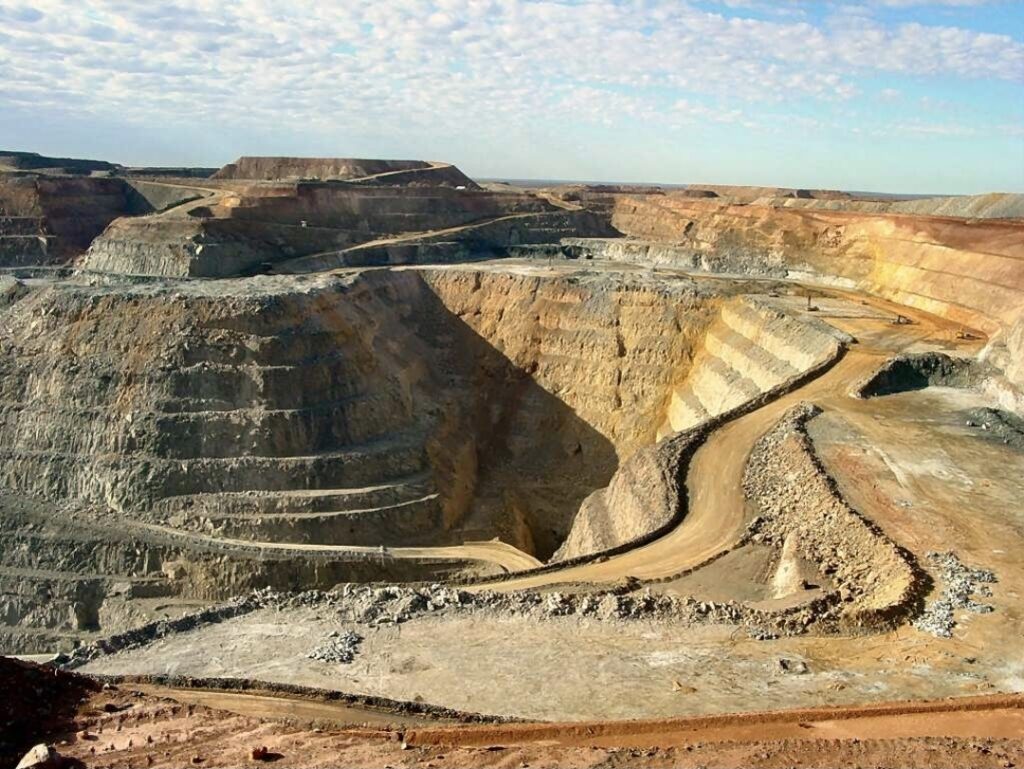
The Imalia Gold and Base Metal Block project in Katni district’s Sleemanabad area represents the most significant component of Madhya Pradesh’s gold discovery. Spread across 6.51 hectares, this deposit contains an estimated 3.35 lakh tonnes of gold ore, from which approximately 3.4 tonnes of pure gold can be extracted. The project has received environmental clearance following public hearings, and mining operations are set to commence under a 50-year lease granted to Mumbai-based Prospect Resources Private Limited.The annual extraction plan envisions removing 33,214 tonnes of gold ore along with other valuable minerals including copper, lead-zinc, and silver. This systematic approach to extraction ensures sustainable mining practices while maximizing resource utilization.
Jabalpur’s Emerging Potential
Beyond Katni, Jabalpur district has emerged as another significant gold-bearing region. The Mahgawan Keolari area in Sihora tehsil has revealed gold deposits spanning approximately 100 hectares. Geological Survey of India (GSI) teams conducted extensive sampling and chemical analysis, confirming the presence of gold alongside iron and manganese ore.
Singrauli’s Mining Renaissance
Singrauli district, India’s energy capital due to its extensive coal reserves, has successfully transitioned into gold mining with four operational gold mines. The auction process for these mines was completed, with different companies now actively extracting gold using modern machinery.
Economic Impact and Revenue Generation
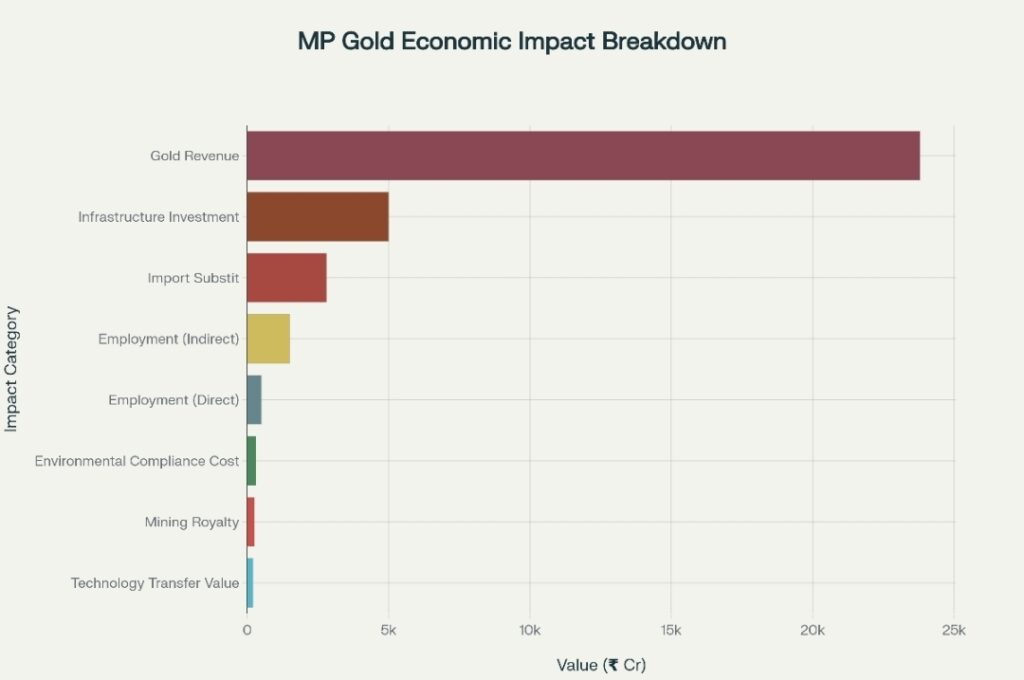
- Total projected economic impact: ₹34,350 crores (direct revenue, employment, infrastructure)
- Annual royalty to the State: ₹250 crores
- Potential employment: ~50,000 jobs (direct + indirect)
- Import substitution: Estimated at ₹2,800 crores over 10 years
India’s Position in the Global Gold Market
Despite these discoveries, India’s share in global gold reserves remains modest compared to leaders like Australia and Russia. However, these findings help in the national goal of reducing reliance on gold imports, promoting mineral self-sufficiency, and greater economic security.
Environmental and Sustainability Considerations
Gold mining operations carry significant environmental implications. All projects must pass rigorous environmental impact assessments and operate under India’s National Mineral Policy (2019), which emphasizes responsible mining, land rehabilitation, and water management.
Regulatory Framework
- Mining operations are supported by India’s open investment policy (up to 100% FDI in most minerals).
- State policies in Madhya Pradesh include single-window clearances and revenue sharing through the District Mineral Foundation (DMF).
- Community development and transparency are guided through the DMF and environmental compliance.
Conclusion: A New Era for Indian Mining
The discovery of 3.35 lakh tonnes of gold ore in Madhya Pradesh signals a new era for India’s mining sector. While adding only a fraction to global reserves, it holds great strategic, economic, and regional significance for India—boosting revenue, employment, and rural infrastructure, and moving the country closer to mineral self-reliance.